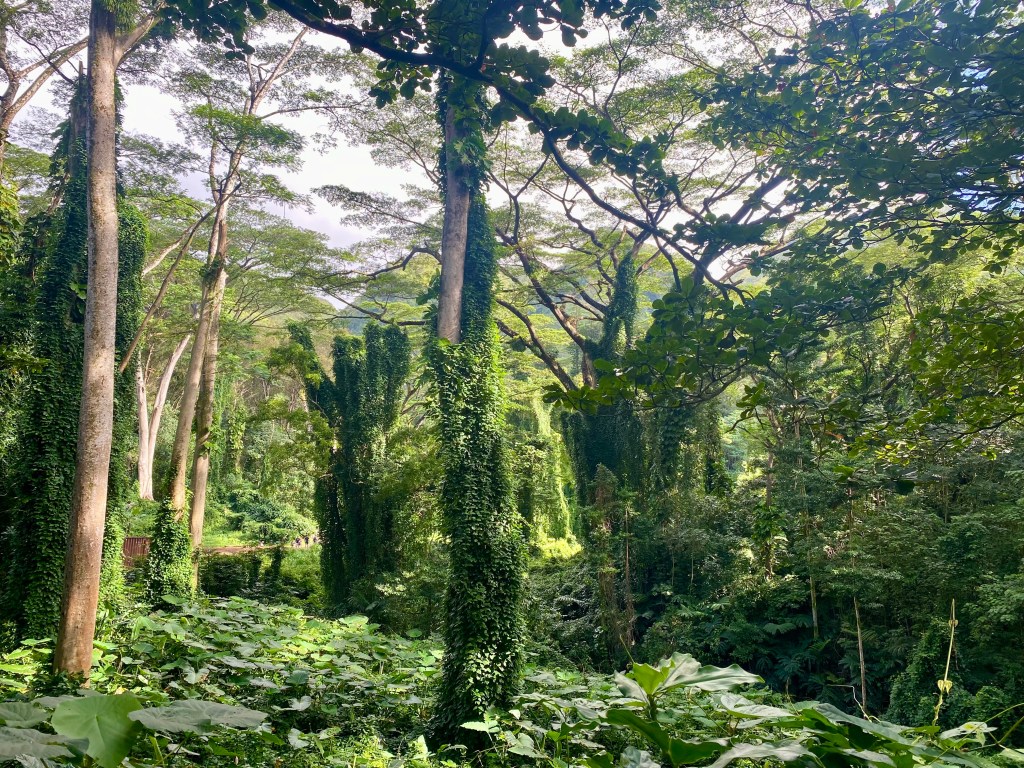
When I am in nature, I feel connected to something bigger than myself, I connect to awe, presence, harmony, balance, power, and a sense of belonging. I truly feel that Nature is healing for mind, body, and soul. Now, I could list scholarly articles and research on the benefits of being in nature, however, in honor of International Day of the World’s Indigenous Peoples, it’s important to me that I center this conversation with a decolonized approach to highlighting the indigenous wisdom to heal and restore wellbeing through nature. This is done not with the intent of appropriating or misusing indigenous knowledge, but rather to expand our understanding of improving our wellness by exploring pathways to integrative and holistic healing.
Connecting to nature is rooted in Indigenous knowledge
The practice of being in nature and connecting to the land is rooted in indigenous knowing and being. As we talk about how nature is healing, it is essential that we talk about it from a decolonized lens. Decolonization means undoing the effects of colonization. Decolonization is always about the land, since historically it has always been about the land and the need to undo the damage dealt to Indigenous peoples for colonizing them and removing their access to their land. Across the world, there are examples of this in the Americas, Australia, Africa, New Zealand, and India. Settlers dominated lands and harmed the integral relationship between land and indigenous peoples’ ways of life, knowing, being, and existing in the world.
Indigenous peoples and our ancestors were embedded in nature and their lands. They created a relationship with nature, one that is always respected and truly meaningful.
The intimate relationship and connection between land, nature and it’s people, although distinct across cultures, is shared by many indigenous folx around the world. In the culture of the Māori people of New Zealand, humans are “deeply connected with nature” with the two being interdependent as reflected in the word ‘kaitiakitanga’, meaning guarding and protecting the environment in order to respect ancestors and secure the future (1). Enrique Salmón of the Rarámuri culture in the eastern part of Chihuahua, Mexico points out, nature and land for indigenous folx, is held with deep respect and as part of an extended family that shares ancestry and origins (2). And for the Cherokee people in present-day northeastern Oklahoma, United States, their rivers, streams and ponds hold a significant meaning to their culture and way of life (3).
How did your ancestors connect with nature?
Take a moment to reflect on your own ancestors and on the ways they were connected with (or disconnected from) their land and what relationship they had with nature.
As I reflect on this I think about my papá and his connection with nature. My father has shared stories with me about how he and his family owned land in a small pueblo in Michoacán, Mexico and they would take care of the land, cattle, and animals to grow food for his family and to sell in the marketplace to other families. From the age of 8 until the age of 13 he would join his grandfather every single day during the summer to climb a nearby mountain in search of a specific fruit that grew on the mountain. This became a tradition for him. Other times, he would assist his grandfather with feeding the cattle and caring for the other animals on the farm. For leisure, he would join siblings and friends at the nearby river to swim and catch fish. He grew up connected with nature, embedded in the land, and took care of the land in assurance that the land would also take care of him and his family. When he reflects on these stories, he always makes it a point how calm, serene, and connected he was with nature and the animals. He also makes it seem like these practices are a distant relic of the past.
When I hear his stories and reflect on my experience with nature and land, I can see how over time I had become disconnected from the natural world. For many indigenous peoples this connection has been unjustly and forcibly severed, and for many others it is a connection that is often overlooked and replaced by commodities of instant gratification.
Start by accessing your internal wisdom and the wisdom of your ancestors, your people, your family, your community, or your culture in order to explore how it can be a healing practice that you integrate in your own life. As you do this, you’ll find your own meaningful way of connecting with nature: a way that makes the most sense for you.
How can you connect with nature?
Take a moment to ask yourself or others, and journal about the following questions:
- What does my relationship with nature currently look like? What does it look like for me to connect with nature? How do I feel when I am in nature?
- What ways did my ancestors, family, community, or culture connect with nature? Why was it important and meaningful for them to do this?
- What are the ways that I can honor their relationship with nature?
- How can nature be healing for my mind? Body? Soul?
- What does access to nature look like for me right now? What are the different ways I can access nature?
- How can I also help care for nature?
- How can I connect with nature in a way that unites the land with others, my community, my people, and my ancestors?
References
- http://www.teara.govt.nz/en/kaitiakitanga-guardianship-and-conservation
- Salmón, E. (2000). Kincentric Ecology: Indigenous Perceptions of the Human-Nature Relationship. Ecological Applications, 10(5), 1327–1332. https://doi.org/10.2307/2641288
- https://www.neh.gov/article/rivers-held-spiritual-place-lives-cherokee
 Michelle Zaragoza, LCSW
Leave a comment